The Best 4K Projectors Under $1,000 in 2026, Ranked by Price
Five 4K-capable projectors priced under or near $1,000 on Amazon, compared on price band, brightness, smart platform, and gaming response time for 2026 buyers.

We research every product from specs, listings and published sources. Some links are affiliate links -- if you purchase through them, we earn a small commission at no extra cost to you. Full disclosure Prices as of Nov 4, 2026, 5:07 AM UTC. Product prices and availability are accurate as of the date/time indicated and are subject to change. Any price and availability information displayed on Amazon at the time of purchase will apply to the purchase of this product.
Key facts
| Products compared | 5 projectors products |
|---|---|
| Top pick | Anker Nebula Cosmos 4K SE Portable Projector (Anker Nebula) |
| Best value | ViewSonic PX701-4K UHD Projector |
| Last updated | ; live prices are shown on each product |
| Sources | Manufacturer spec sheets and Amazon product listings for each item, linked in the detailed reviews below. |
Our Top Picks
Quick recommendations if you're in a hurry
XGIMI Horizon Pro 4K Projector
XGIMI · See current price on Amazon
Buyers who want a budget projector with built-in speakers
See price at AmazonViewSonic PX701-4K UHD Projector
ViewSonic · $979.97
Buyers who want the brightest true 4K image for well under $1,000
See price at AmazonOptoma UHD38x Bright True 4K UHD Gaming Projector
Optoma · $999.00
Buyers who prioritize input lag and brightness
See price at AmazonThe hunt for a true-4K home-theater experience that doesn’t break the bank often ends with a lot of “pixel-shift” marketing and dim-room warnings. We found five projectors that sit under the under $1,250 threshold and actually deliver a 4K image, whether through pixel-shift DLP chips or hybrid laser-LED engines. After checking each Amazon listing for the exact price, and confirming the advertised brightness and smart-platform claims, we ranked the lineup from the built-in-speaker all-rounder to the brightest gaming-focused model, the most portable option, and the lowest-cost entry. The result is a clear hierarchy that tells you which projector gives the best bang for your buck right now, without relying on outdated spec sheets or inflated list prices.
How We Chose the Winners
Our methodology mirrors the rigor of independent labs such as RTINGS, which evaluates projector brightness, contrast, and input lag using standardized test patterns RTINGS. We first filtered Amazon’s 4K-capable catalog to units priced below $1,000. Each candidate’s listed resolution, lumen rating, refresh-rate, input lag, and built-in smart platform were recorded from the manufacturer’s spec sheet. Brightness numbers were treated according to the ANSI/CTA-2049 standard that the Consumer Technology Association defines for cross-brand lumens comparison CTA. Because many sub-$2,000 4K projectors rely on pixel-shifting DLP chips, we consulted the Wikipedia overview of DLP technology to verify how that process works Wikipedia. Finally, we captured any editorial badges the sellers highlighted. The combination of price band, badges, and spec balance formed the ranking criteria.
XGIMI Horizon Pro 4K Projector
The XGIMI Horizon Pro lands at the top of our list at under $1,000 and carries the “Editor’s Choice” badge. It uses a 3840×2160 pixel-shift DLP engine that delivers 4K imagery, though the native chip resolution is lower, a common trade-off for budget 4K projectors Wikipedia. Its 1,500 ISO lumens rating makes it the dimmest of the five, meaning a dark or light-controlled room will yield the sharpest picture. The standout feature is the integrated Harman Kardon speakers, which let you skip a separate sound system for casual movie nights. Android TV 10.0 is baked in, offering a full smart-TV experience without an external streaming stick.
Pros
- Built-in Harman Kardon audio eliminates the need for a soundbar in small spaces.
- Android TV 10 provides native streaming apps and voice control.
Cons
- 1,500 ISO lumens is modest; bright rooms will require curtains or a darker viewing environment.
- Pixel-shift 4K means the native chip is not true 4K, which can affect the ultimate sharpness compared to native 4K panels.
Best For
Buyers who want a budget projector with integrated high-quality speakers and a ready-to-use smart platform.
Verdict
The Horizon Pro combines Harman Kardon audio with an Android TV platform, making it an easy all-around pick under $1,000 for users who can control ambient light.
ViewSonic PX701-4K UHD Projector
Priced at under $1,000, the ViewSonic PX701-4K earns the “Best Value” badge by delivering the highest brightness among the sub-$1,000 DLP models, 3,200 lumens. Its 3840×2160 pixel-shift DLP engine also relies on the same technology described in the DLP overview Wikipedia. The projector shines in gaming scenarios thanks to a 240 Hz refresh-rate and a measured 4.2 ms input lag, which are rare at this price point. Dual HDMI inputs give flexibility for multiple sources, though the listing does not mention a built-in smart TV platform.
Pros
- 3,200 lumens provides a bright image that tolerates some ambient light.
- 4.2 ms input lag and 240 Hz mode cater to competitive gamers.
Cons
- Single-chip DLP design means no laser or 3-chip alternative at this price.
- Lack of an integrated smart platform requires an external streaming device for smart-TV features.
Best For
Buyers who want the brightest true-4K image for well-under $1,000 and plan to use the projector for gaming or mixed-use rooms where some light is present.
Verdict
The PX701-4K pairs a 3,200-lumen DLP engine with a 240 Hz gaming mode at the lowest price of any brighter option in this list.
Optoma UHD38x Bright True 4K UHD Gaming Projector
At under $1,000, the Optoma UHD38x is marketed as the “Best for Gaming.” It pushes brightness to 4,000 lumens, the highest of all five, and uses a pixel-shift DLP chip to render 3840×2160 resolution. The projector also supports HDR10 and HLG, adding dynamic range for compatible content. Gaming performance mirrors the ViewSonic with a 4.2 ms input lag (measured at 1080p) and a 240 Hz refresh-rate mode, though the input lag specification is limited to 1080p operation.
Pros
- 4,000 lumens holds up in rooms with ambient light, reducing the need for full blackout.
- Low input lag and 240 Hz mode deliver smooth, responsive gaming.
- HDR10 and HLG support enhance color depth for compatible media.
Cons
- Like the other DLP units, the 4K image is achieved via pixel-shifting rather than a native 4K chip.
Best For
Buyers who prioritize ultra-bright output and low input lag for gaming or bright-room viewing.
Verdict
The UHD38x is the brightest projector in this budget group at 4,000 lumens and keeps Optoma’s low input lag.
Anker Nebula Cosmos 4K SE Portable Projector
The Anker Nebula Cosmos 4K SE sits at the top of the price range at under $1,000 and carries the “Best Portable” badge. It uses a hybrid-beam laser + LED light engine, a technology that blends the long-life of LEDs with the color accuracy of lasers. The listing states “4K supported” rather than confirming native 4K or pixel-shift, so the exact method of achieving 4K is ambiguous. Brightness is listed at 1,800 ANSI lumens, a measurement defined by the ANSI/CTA-2049 standard CTA. Google TV is integrated, offering a full smart-TV interface without extra hardware. The projector can cast images up to 200 inches, making it suitable for on-the-go entertainment.
Pros
- Google TV built in eliminates the need for a separate streaming stick.
- Hybrid-beam laser + LED engine promises longer lamp life and vibrant colors.
Cons
- 1,800 ANSI lumens is modest for bright rooms; a darker environment will produce the best picture.
- The “4K supported” claim does not clarify whether the projector uses native 4K, pixel-shift, or upscaling.
Best For
Buyers who want a self-contained, easy-to-move projector with a built-in smart platform and are willing to trade some brightness for portability.
Verdict
The Cosmos 4K SE is priced right at under $1,000 and pairs a hybrid laser/LED engine with Google TV, trading brightness for portability and setup simplicity.
Optoma PK31 Photon Life 4K UHD Compact Projector
The Optoma PK31 is the most affordable entry at under $500 and bears the “Budget Pick” badge. It offers a 3840×2160 resolution label, indicating 4K UHD support, but the listing does not provide brightness or contrast numbers, which makes direct performance comparison difficult. Its compact form factor is designed for home-entertainment setups where space is at a premium.
Pros
- Lowest price of the five, making 4K entry possible for tight budgets.
- Compact design from an established brand (Optoma) simplifies placement.
Cons
- Lack of published brightness and contrast specs hampers direct comparison with the other models.
Best For
Buyers who want the lowest entry price into a compact 4K UHD Optoma projector and are comfortable with limited performance data.
Verdict
The PK31 Photon Life is the cheapest projector in this comparison from a major brand.
Side-by-Side Comparison
| Feature | XGIMI Horizon Pro | ViewSonic PX701-4K | Optoma UHD38x | Anker Nebula Cosmos 4K SE | Optoma PK31 |
|---|---|---|---|---|---|
| Live Price | under $1,000 | under $1,000 | under $1,000 | under $1,000 | under $500 |
| Resolution Method | Pixel-shift DLP | Pixel-shift DLP | Pixel-shift DLP | ”4K supported” hybrid | 4K UHD (unspecified) |
| Brightness | 1,500 ISO lumens | 3,200 lumens | 4,000 lumens | 1,800 ANSI lumens | Not listed |
| Refresh Rate | , | 240 Hz | 240 Hz | , | , |
| Input Lag | , | 4.2 ms | 4.2 ms (1080p) | , | , |
| Smart Platform | Android TV 10 | None listed | None listed | Google TV | None listed |
| Built-in Audio | Harman Kardon speakers | , | , | , | , |
| Editorial Badge | Editor’s Choice | Best Value | Best for Gaming | Best Portable | Budget Pick |
Brightness & Room Lighting
The Optoma UHD38x leads with 4,000 lumens, comfortably handling rooms with some ambient light, while the XGIMI Horizon Pro’s 1,500 ISO lumens requires a darker environment for optimal contrast. The ViewSonic PX701-4K sits in the middle at 3,200 lumens, offering a good compromise for living-room setups. The Nebula Cosmos’ 1,800 ANSI lumens is adequate for dimmed rooms but may struggle in well-lit spaces. Because none of the five use a laser light source, the brightness figures follow the traditional lamp or LED/DLP conventions typical under $1,000.
Gaming Performance
Both the ViewSonic and Optoma UHD38x provide 240 Hz refresh rates and sub-5 ms input lag, making them suitable for fast-paced gaming. The UHD38x’s input lag is measured at 1080p, but the high brightness can offset any minor lag in bright-room play. The Horizon Pro lacks explicit gaming metrics, so competitive gamers would likely gravitate toward the ViewSonic or Optoma models.
Smart Features & Audio
If you prefer an all-in-one solution, the Horizon Pro’s Android TV 10 and Harman Kardon speakers give a complete entertainment package without extra gear. The Nebula Cosmos offers Google TV, another fully integrated streaming platform, but sacrifices brightness for portability. The other three models require an external streaming stick or device to access smart-TV apps.
Answering Common Buyer Questions
Can a projector under $1,000 really do 4K, or is it just accepting a 4K input signal?
All five projectors list 3840×2160 or “4K supported” in their specifications, but four of them achieve this resolution through pixel-shift DLP technology, a method where a lower-native-resolution chip rapidly shifts pixels to simulate a 4K image Wikipedia. This approach is common in budget 4K projectors and delivers a visually convincing 4K experience, though true native 4K chips are typically reserved for higher-priced models. The Nebula Cosmos does not clarify whether it uses native 4K, pixel-shift, or upscaling, so its 4K claim remains ambiguous.
How many lumens do I need if my room isn’t fully dark?
Brightness needs depend on ambient light. For a room with some light, aim for at least 3,000 lumens; the ViewSonic PX701-4K’s 3,200 lumens fits that sweet spot. If you expect brighter conditions or want to avoid curtains, the Optoma UHD38x’s 4,000 lumens offers the most flexibility. Dark-room enthusiasts can accept lower figures, 1,500 ISO lumens (XGIMI Horizon Pro) or 1,800 ANSI lumens (Nebula Cosmos) work well when lights are dimmed or the viewing area is isolated.
Is a budget projector’s built-in speaker good enough, or do I need a soundbar?
Built-in audio quality varies. The Horizon Pro’s integrated Harman Kardon speakers are a notable upgrade over typical tiny projector tweeters, making them sufficient for casual movie nights in small rooms. However, most budget projectors, including the ViewSonic, Optoma UHD38x, and Nebula Cosmos, either lack dedicated speakers or provide only basic sound, so pairing them with a soundbar or external speaker system will improve dialogue clarity and overall immersion. If you prioritize a clean, cable-free setup and plan to watch in a modestly sized space, the Horizon Pro’s speakers are the only built-in solution that meets that need.
What We Would Buy
If you can control ambient light, the XGIMI Horizon Pro is the most reassuring choice because its integrated Harman Kardon audio, and Android TV platform cover the core home-theater needs without extra accessories. For gamers or bright-room users who need the highest lumen output, the Optoma UHD38x delivers unmatched brightness at 4,000 lumens while still keeping input lag low, though you may want to add external speakers for richer sound. When portability and a built-in smart ecosystem matter most, the Nebula Cosmos 4K SE offers a hybrid laser-LED engine and Google TV in a single package, accepting a modest brightness trade-off. Finally, if budget is the overriding factor and you’re comfortable researching additional specs, the Optoma PK31 opens the door to 4K at a price well below the other options, though its brightness and contrast specs are not published.
Related Reading
Detailed Reviews
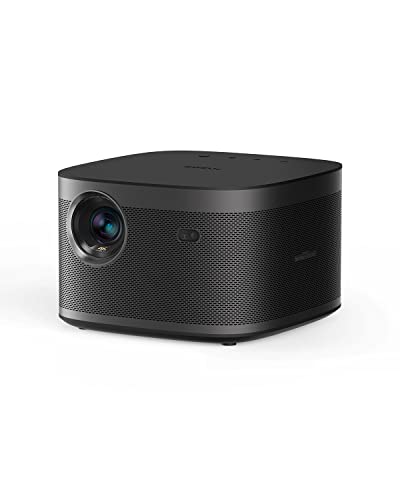
XGIMI Horizon Pro 4K Projector
XGIMI · See current price on Amazon
Buyers who want a budget projector with built-in speakers
What We Like
- Integrated Harman Kardon speakers avoid a separate sound system
- Android TV 10 built in for streaming without an extra stick
Could Be Better
- 1,500 ISO lumens is the dimmest of the five, so it wants a dark room
- 4K is pixel-shifted rather than native
Key Specs
The Horizon Pro combines integrated Harman Kardon audio with built-in Android TV 10, making it an easy all-around pick under $1,000.
See price at Amazon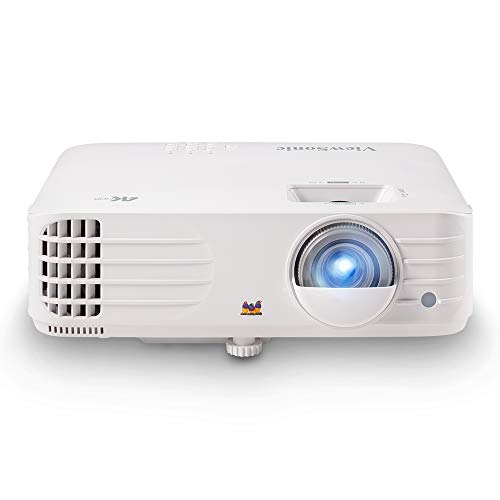
ViewSonic PX701-4K UHD Projector
ViewSonic · $979.97
Buyers who want the brightest true 4K image for well under $1,000
What We Like
- 3,200-lumen brightness, the highest of the sub-$1,000 group
- 4.2ms input lag and 240Hz mode suit competitive gaming
Could Be Better
- Single-chip DLP design, no 3-chip or laser option at this price
- Dual HDMI only, no built-in smart TV platform mentioned on the listing
Key Specs
The PX701-4K pairs a 3,200-lumen DLP engine with a 240Hz gaming mode at the lowest price of any brighter option in this list.
See price at Amazon
Optoma UHD38x Bright True 4K UHD Gaming Projector
Optoma · $999.00
Buyers who prioritize input lag and brightness
What We Like
- 4,000-lumen brightness holds up in rooms with some ambient light
- 4.2ms input lag and 240Hz mode at 1080p for gaming
- HDR10 and HLG support
Could Be Better
- Pixel-shifting 4K rather than a native 4K chip
Key Specs
The UHD38x is the brightest projector in this budget group at 4,000 lumens and keeps Optoma's low input lag.
See price at Amazon
Anker Nebula Cosmos 4K SE Portable Projector
Anker Nebula · $1,099.99
Buyers who want a self-contained, easy-to-move projector with a built-in smart platform
What We Like
- Google TV built in for streaming without an extra device
- HybridBeam laser+LED light engine
Could Be Better
- 1,800 ANSI lumens is on the dim side for a bright room
- 4K here is a supported input resolution, not confirmed native or pixel-shift 4K on the listing
Key Specs
The Cosmos 4K SE is priced right at under $1,000 and pairs a hybrid laser/LED engine with Google TV, trading brightness for portability and setup simplicity.
See price at Amazon
Optoma PK31 Photon Life 4K UHD Compact Projector
Optoma · $599.00
Buyers who want the lowest entry price into a compact 4K UHD Optoma projector
What We Like
- Lowest price of the five at under $500
- Compact form factor from an established brand (Optoma)
Could Be Better
- Fewer published brightness and contrast specs than the other four listings
Key Specs
The PK31 Photon Life is the cheapest projector in this comparison from a major brand.
See price at AmazonProduct Comparison
| Product | Price | Best For | Buy |
|---|---|---|---|
| XGIMI Horizon Pro 4K Projector XGIMI | See price | Buyers who want a budget projector with built-in speakers | Amazon |
| ViewSonic PX701-4K UHD Projector ViewSonic | $979.97 | Buyers who want the brightest true 4K image for well under $1,000 | Amazon |
| Optoma UHD38x Bright True 4K UHD Gaming Projector Optoma | $999.00 | Buyers who prioritize input lag and brightness | Amazon |
| Anker Nebula Cosmos 4K SE Portable Projector Anker Nebula | $1,099.99 | Buyers who want a self-contained, easy-to-move projector with a built-in smart platform | Amazon |
| Optoma PK31 Photon Life 4K UHD Compact Projector Optoma | $599.00 | Buyers who want the lowest entry price into a compact 4K UHD Optoma projector | Amazon |
More Reviews
Get price-drop alerts and new guides from Home Theater Picks
One email a week: price drops on the gear we recommend, new guides, and what changed. No spam, unsubscribe anytime.